Overview of Aokigahara Forest
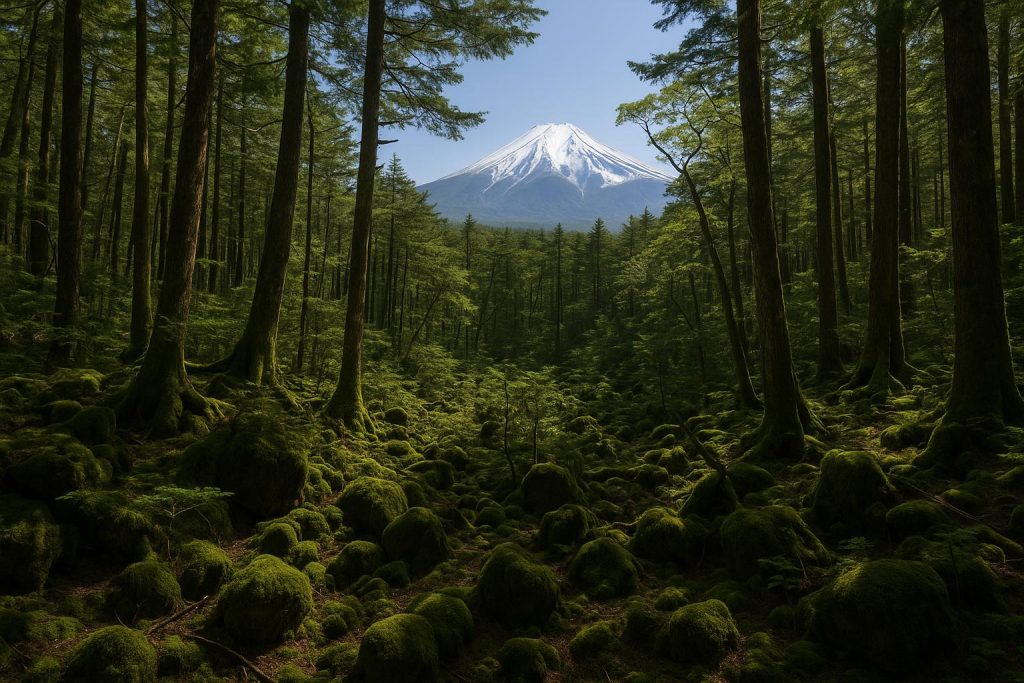
The Aokigahara Forest, commonly referred to as the “Sea of Trees,” is a vast expanse of dense woodland located at the northwestern base of Mount Fuji in Japan. Renowned for its serene natural beauty and tranquil ambiance, this forest offers a unique escape into nature. Aokigahara is celebrated not only for its lush, verdant scenery but also for its distinctive ecological features. This forest draws hikers and nature enthusiasts from around the world, all who come to experience its rich biodiversity and captivating landscape.
Geological Features
Aokigahara is a landscape molded by the forces of nature, primarily resulting from the volcanic activity of Mount Fuji. Formed on a base of hardened lava from ancient eruptions, the forest is replete with geological marvels. The terrain is rugged and uneven, a footprint of the volcanic bedrock beneath. One can find an array of remarkable caves amidst this landscape that have piqued the curiosity of both scientists and tourists alike. Notably, the Narusawa Ice Cave and the Fugaku Wind Cave stand out as extraordinary natural formations.
These caves maintain stable temperatures throughout the year, creating conditions that support the preservation of fascinating ice formations. The Narusawa Ice Cave, for example, is renowned for its stunning ice pillars that remain intact even during the warmer months. Meanwhile, the Fugaku Wind Cave is noted for its windy passages and year-round icy environment. These unique geological features make Aokigahara a place of interest for those intrigued by the interactions between geology and climate.
Ecological Significance
The ecological significance of Aokigahara cannot be overstated. The forest’s fertile, volcanic soil nurtures a plethora of plant species, creating a complex and verdant ecosystem. Dominant tree species include the hemlock fir, Japanese cypress, and various broadleaf species, each contributing to the forest’s dense canopy. Within this lush greenery, a variety of animal life thrives. The forest serves as a habitat for numerous avian species, adding a symphony of bird calls to the quietude of the forest.
In addition to birds, small mammals and a diverse range of insects can be found within Aokigahara. This biodiversity supports a delicate ecological balance, highlighting the forest’s role as a refuge for wildlife. The nutritional abundance provided by the volcanic soil is a boon to the flora, which in turn supports a vibrant array of fauna, making Aokigahara a critical reservoir of natural heritage.
Access and Exploration
For those seeking to immerse themselves in the majesty of Aokigahara, the forest is highly accessible. Visitors can embark on an adventure along its meticulously marked trails, which cater to both casual walkers and seasoned hikers. Two prominent pathways, the East Trail and the West Trail, meander through the forest’s interior, offering explorers stunning vistas of Mount Fuji and glimpses of the unique ecosystem beneath the canopy.
Hiking in Aokigahara allows visitors to appreciate the forest’s beauty while experiencing a sense of tranquility and reflection. The trails are well-maintained, providing a safe and enjoyable hiking experience. Along the way, hikers can explore the dynamic interactions between the forest’s geological and ecological elements, gaining a deeper understanding of this intriguing environment.
Cultural Context
Aokigahara is steeped in cultural history and has featured prominently in Japanese folklore. It is often depicted as a place infused with a sense of mystery and spirituality. The forest’s enigmatic reputation is partly due to legends and stories passed down through generations, contributing to its aura of intrigue. For a more comprehensive understanding of Aokigahara’s cultural significance, visitors can explore the museums and cultural centers located in the nearby towns.
These institutions provide insights into the storied past of the region, offering narratives and artifacts that enrich the visitor experience. Through these cultural explorations, one can connect the natural wonders of Aokigahara with the human stories and beliefs that have shaped its history.
For those seeking more information about the Aokigahara Forest, the Japan Travel’s official page serves as a valuable resource. This website offers guidance on planning a visit, as well as insights into the natural and cultural elements that define Aokigahara. Whether you are planning your journey or simply wish to learn more, this resource provides a wealth of information to enhance your exploration of one of Japan’s most captivating natural environments.